
-
×
 Wolverine (BPC-157, TB-500)
1 × $89.99
Wolverine (BPC-157, TB-500)
1 × $89.99
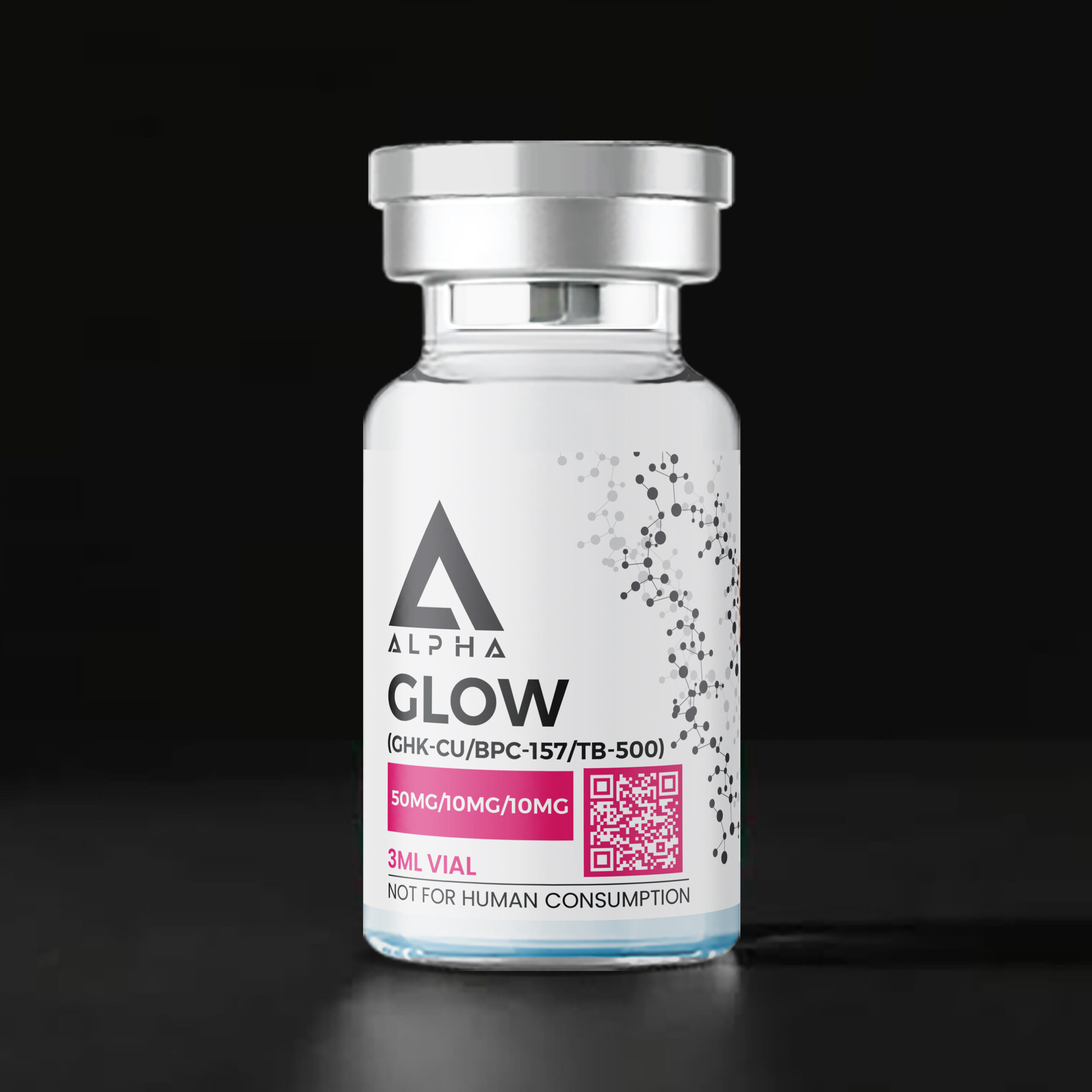
GLOW (GHK-CU, BPC-157, TB-500)
$119.99
The GLOW peptide stack combines three widely studied research compounds—GHK-Cu, BPC-157, and TB-500—explored in scientific research for their roles in tissue regeneration pathways, collagen synthesis signaling, and cellular repair mechanisms. This product is intended strictly for laboratory research use only and is not approved for human or veterinary use.
What is the GLOW Peptide Stack?
Overview of the GLOW Regenerative Research Formula
The GLOW peptide stack is a premium research combination designed for scientific exploration of tissue regeneration, skin biology, and cellular repair pathways. It brings together three well-studied bioactive peptides that interact with complementary biological systems involved in healing, structural repair, and extracellular matrix remodeling.
This formulation is strictly intended for laboratory research use only (RUO) and is not approved for medical, therapeutic, or veterinary applications.
Key Components of the GLOW Stack
GHK-Cu – Copper Peptide for Skin & Collagen Signaling
GHK-Cu is a naturally occurring tripeptide-copper complex studied for its role in skin regeneration, wound healing signaling, and extracellular matrix remodeling.
Research focus includes:
- Collagen synthesis signaling pathways
- Skin regeneration and repair models
- Antioxidant and anti-inflammatory responses
- Gene expression related to tissue remodeling
BPC-157 – Body Protection Compound
BPC-157 is widely studied in preclinical research for its involvement in tissue repair, angiogenesis, and cellular healing mechanisms.
Research focus includes:
- Tendon and ligament repair pathways
- Vascular regeneration models
- Cellular migration and healing responses
- Inflammation modulation research
TB-500 – Thymosin Beta-4 Fragment
TB-500 is a synthetic peptide fragment studied for its role in actin regulation, cell migration, and tissue regeneration processes.
Research focus includes:
- Cellular movement and structural repair
- Muscle and connective tissue regeneration
- Angiogenesis and wound healing models
- Tissue remodeling pathways
Why Researchers Combine the GLOW Stack
Multi-Pathway Regeneration Synergy
The GLOW stack is designed for research exploring multiple overlapping biological systems:
- GHK-Cu → collagen synthesis & skin repair signaling
- BPC-157 → vascular & tissue regeneration pathways
- TB-500 → cellular migration & structural repair
Together, they form a multi-dimensional model for regenerative biology research.
Skin, Tissue & Cellular Repair Research
This combination is frequently studied in experimental models involving:
- Skin regeneration and wound healing
- Extracellular matrix remodeling
- Inflammation and repair signaling
- Cellular recovery mechanisms
Scientific Research Applications
In laboratory settings, the GLOW peptide stack is studied for:
- Skin biology and collagen research
- Wound healing mechanism studies
- Tissue regeneration signaling analysis
- Inflammation pathway modulation
- Cellular repair and recovery modeling
These applications are strictly experimental and contribute to regenerative science research.
Global Research Interest
Interest in regenerative peptide stacks continues to grow across major biotech and scientific regions, including:
United States 🇺🇸, Canada 🇨🇦, United Kingdom 🇬🇧, Germany 🇩🇪, France 🇫🇷, Switzerland 🇨🇭, Australia 🇦🇺, United Arab Emirates 🇦🇪, Saudi Arabia 🇸🇦, and China 🇨🇳.
Regulatory classification varies widely, and these compounds are typically restricted to controlled laboratory research environments.
Safety, Compliance, and Intended Use
This product is:
- Intended strictly for laboratory research use only (RUO)
- Not approved for human consumption or medical treatment
- Not intended for veterinary use
- Restricted to qualified research professionals
Proper handling and compliance with all local regulations is required.
Why the GLOW Stack is Scientifically Important
The GLOW stack is widely studied due to its relevance in:
- Collagen and extracellular matrix research
- Skin regeneration and repair pathways
- Tissue healing and vascular studies
- Cellular migration and recovery mechanisms
Its multi-peptide design makes it valuable in advanced regenerative biology research.
Be the first to review “GLOW (GHK-CU, BPC-157, TB-500)”
Related products


Reviews
There are no reviews yet.