
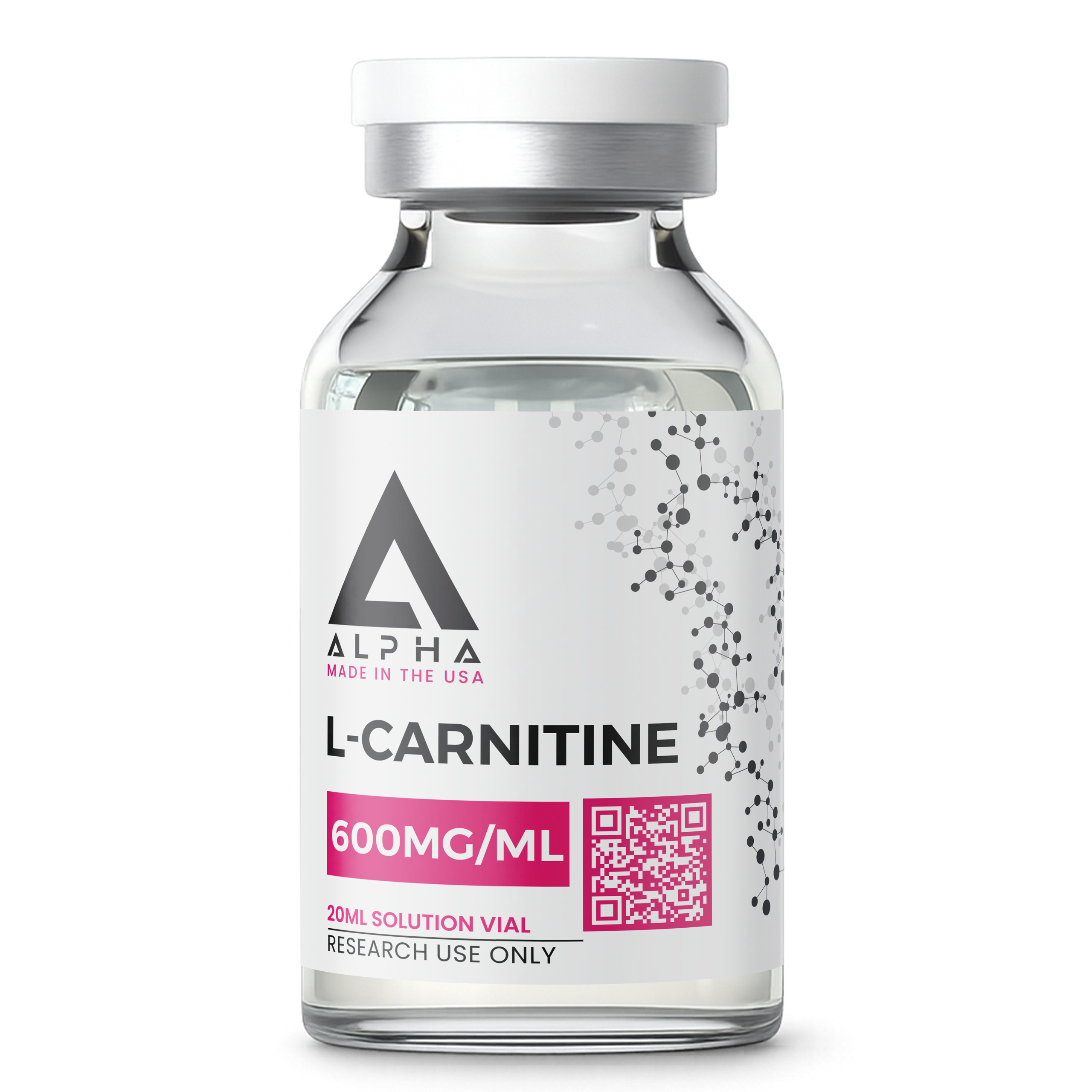
L-Carnitine

L-Carnitine is a high-purity research compound widely studied for its role in cellular energy transport, mitochondrial function, metabolic regulation, and physiological adaptation research. Manufactured according to strict research-grade standards, L-Carnitine is intended exclusively for laboratory, scientific, and educational research applications.
L-Carnitine – Advanced Research Compound for Cellular Energy and Metabolic Studies
Exploring Mitochondrial Function, Cellular Energy, and Metabolic Science
L-Carnitine is one of the most extensively researched compounds in metabolic science and cellular biology. Researchers continue investigating its role in energy transport mechanisms, mitochondrial function, cellular metabolism, and physiological adaptation pathways.
As scientific interest in metabolism and energy regulation continues to expand, L-Carnitine remains a valuable tool for understanding how biological systems generate, utilize, and regulate energy. Its importance in cellular energy research has made it a widely utilized compound in biotechnology, academic research, and biomedical science laboratories worldwide.
Manufactured under rigorous quality-control standards, L-Carnitine is intended solely for laboratory, scientific, and educational research purposes.
What Is L-Carnitine?
L-Carnitine is a naturally occurring compound frequently studied for its involvement in cellular energy transport and mitochondrial research. Scientists investigate its role in biological systems associated with energy metabolism and nutrient utilization.
Researchers commonly use L-Carnitine in studies involving:
- Cellular energy transport
- Mitochondrial function
- Metabolic regulation
- Nutrient utilization pathways
- Cellular adaptation research
- Exercise physiology investigations
- Energy expenditure studies
- Biomedical science applications
Its broad scientific relevance makes it a valuable research tool across multiple disciplines.
Why Researchers Study L-Carnitine
Cellular Energy Research
One of the primary areas of interest surrounding L-Carnitine involves understanding how cells generate and utilize energy efficiently.
Mitochondrial Function Studies
Researchers continue examining mitochondrial biology and the mechanisms responsible for energy production within cells.
Metabolic Regulation Investigations
Scientific studies often focus on how biological systems regulate nutrient utilization, energy balance, and metabolic communication.
Exercise Physiology Research
L-Carnitine is frequently included in laboratory investigations exploring endurance-related biological pathways and physiological adaptation.
Key Research Applications
Mitochondrial Biology Research
Studies investigating cellular energy production and mitochondrial efficiency.
Cellular Metabolism Investigations
Research examining nutrient utilization and metabolic regulation pathways.
Energy Transport Studies
Scientific exploration of biological systems involved in energy movement and cellular function.
Exercise Physiology Research
Studies evaluating physiological adaptation and energy-related biological responses.
Biomedical Research Applications
Advanced laboratory investigations involving metabolic communication and cellular signaling pathways.
Premium Research-Grade Quality
Our L-Carnitine is manufactured according to rigorous scientific standards to support reliable and reproducible research outcomes.
Quality features include:
- High-purity research-grade formulation
- Comprehensive quality-control testing
- Verified batch consistency
- Laboratory-grade manufacturing standards
- Secure packaging for product stability
- Suitable for advanced scientific investigations
Every batch undergoes extensive verification procedures to ensure quality, consistency, and scientific integrity.
Growing Interest in L-Carnitine Research
Interest in L-Carnitine continues to grow among biotechnology companies, metabolic science laboratories, academic institutions, and biomedical researchers worldwide.
As scientific understanding of cellular energy systems and mitochondrial biology advances, researchers increasingly investigate compounds that help illuminate the mechanisms behind energy transport and metabolic regulation.
Researchers across North America, Europe, Asia, Australia, and the Middle East continue utilizing L-Carnitine in studies focused on metabolism, energy utilization, and physiological adaptation.
Who Uses L-Carnitine in Research?
L-Carnitine is commonly utilized by:
- Biotechnology organizations
- Academic research institutions
- Metabolic science laboratories
- Exercise physiology researchers
- Biomedical investigators
- Cellular biology specialists
- Pharmaceutical development teams
Its versatility supports a wide range of advanced scientific research programs.
Research Use Disclaimer
L-Carnitine is intended strictly for laboratory research, scientific investigation, and educational purposes. This product is not approved for human consumption, medical treatment, diagnosis, or therapeutic use. All research should be conducted by qualified professionals in appropriately equipped laboratory environments.
Be the first to review “L-Carnitine”
Related products


Reviews
There are no reviews yet.