
 Semax
Semax 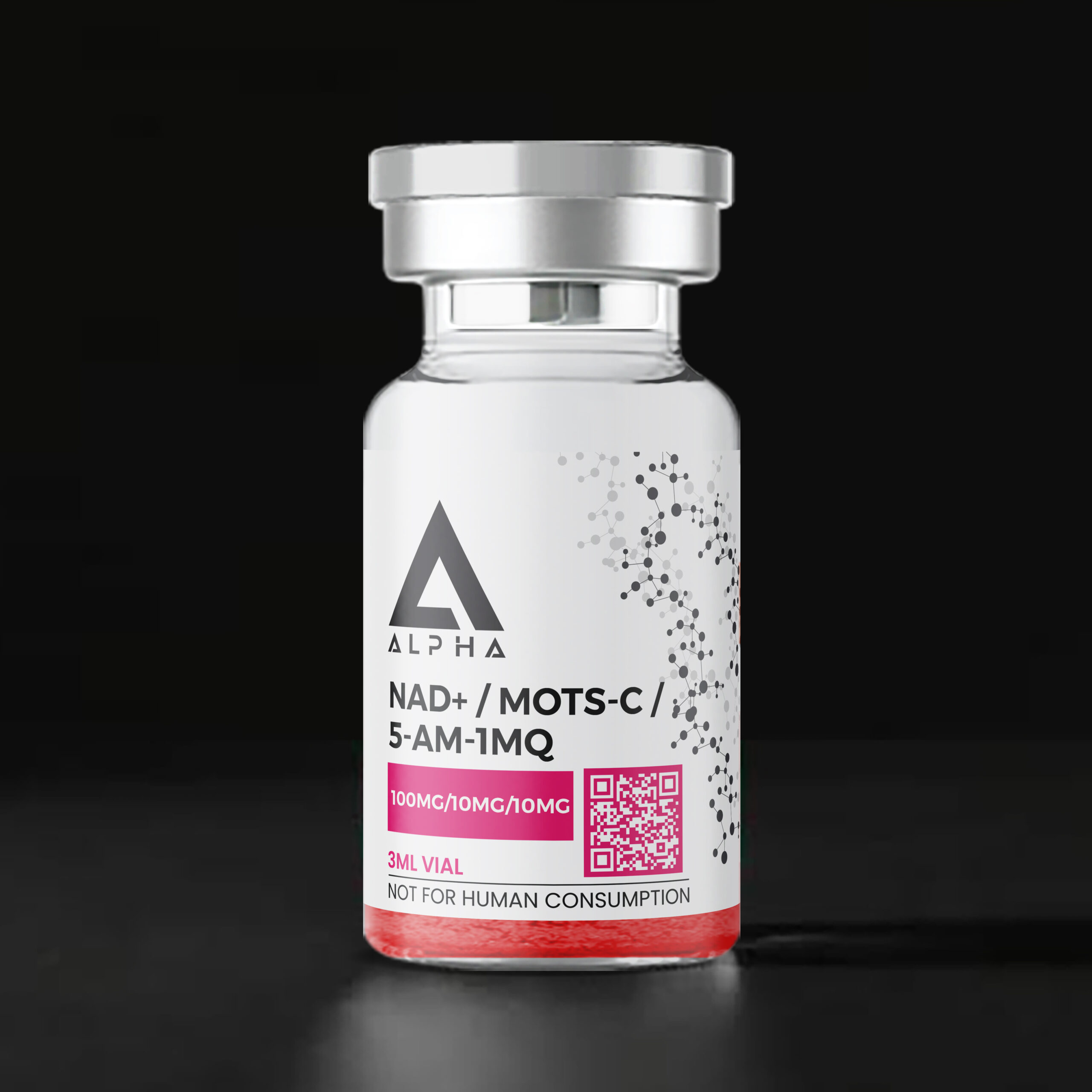
NAD+ / MOTS-C / 5-Amino-1MQ


$114.99
NAD+, MOTS-C, and 5-Amino-1MQ form a synergistic metabolic research stack widely studied in cellular energy production, mitochondrial signaling, and metabolic regulation pathways. This combination is used in laboratory research models exploring energy metabolism, mitochondrial efficiency, and cellular aging mechanisms. This product is intended strictly for laboratory research use only and is not approved for human or veterinary use.
What is the NAD+ / MOTS-C / 5-Amino-1MQ Research Stack?
Overview of the Metabolic Research Stack
In laboratory research settings, this combination is explored for its potential interactions across energy metabolism, mitochondrial signaling, and cellular adaptation mechanisms.
This product is strictly intended for research use only (RUO) and is not approved for human or veterinary use.
How Each Component Works in Research Models
NAD+ – Cellular Energy and Redox Balance
NAD+ plays a central role in cellular metabolism by supporting:
- ATP energy production pathways
- Redox balance and oxidative metabolism
- DNA repair signaling pathways
- Mitochondrial function regulation
MOTS-C – Mitochondrial Signaling Peptide
MOTS-C is studied for its role in mitochondrial communication and metabolic adaptation, including:
- Glucose metabolism regulation
- Cellular stress response signaling
- Energy homeostasis pathways
- Mitochondrial-nuclear communication
5-Amino-1MQ – NAD+ Pathway Modulation
5-Amino-1MQ is investigated for its role in NAD+ metabolism and cellular energy balance, including:
- NAD+ salvage pathway modulation
- Metabolic efficiency research models
- Fatty acid metabolism signaling
- Cellular energy regulation pathways
Scientific Research Applications
This metabolic stack is widely used in laboratory research for:
- Mitochondrial function studies
- Cellular energy metabolism research
- Metabolic pathway modeling
- Aging and cellular resilience studies
- Oxidative stress response research
- Energy production and ATP synthesis analysis
These applications are strictly experimental and contribute to understanding metabolic and mitochondrial biology.
Why This Metabolic Stack is Scientifically Important
Mitochondrial Efficiency Research
This stack is frequently studied due to its relevance in mitochondrial function, which is central to energy production and cellular health.
Integrated Metabolic Signaling
Researchers use this combination to explore how:
- NAD+ levels influence cellular energy systems
- Mitochondrial peptides regulate metabolism
- Small molecules modulate energy pathways
- Cellular stress responses are coordinated
Global Research Interest
Interest in metabolic and mitochondrial research compounds is growing across major scientific regions, including:
United States 🇺🇸, Canada 🇨🇦, United Kingdom 🇬🇧, Germany 🇩🇪, France 🇫🇷, Switzerland 🇨🇭, Australia 🇦🇺, United Arab Emirates 🇦🇪, Saudi Arabia 🇸🇦, and China 🇨🇳.
Regulatory classification varies widely, and these compounds are generally restricted to controlled laboratory research environments.
Safety, Compliance, and Intended Use
This product is:
- Intended strictly for laboratory research use only (RUO)
- Not approved for human consumption or medical treatment
- Not intended for veterinary use
- Restricted to qualified research professionals
Proper handling and compliance with all local regulations is required at all times.
Why This Stack is Important in Metabolic Research
This combination is widely studied due to its relevance in:
- Mitochondrial energy production pathways
- Cellular metabolism and ATP synthesis
- NAD+ regulation and redox biology
- Metabolic adaptation and stress response
It provides a multi-pathway model for studying cellular energy systems.
Be the first to review “NAD+ / MOTS-C / 5-Amino-1MQ”
Related products


Reviews
There are no reviews yet.